
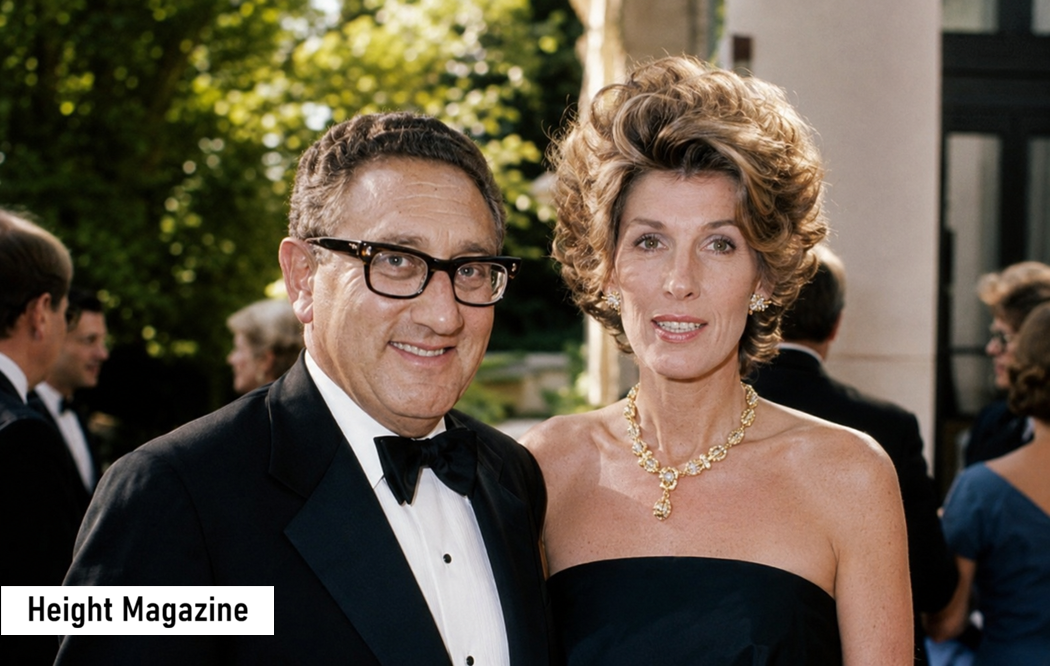
Who Is Ann Fleischer?
Ann Fleischer is widely known as the first wife of Henry Kissinger, the German-American diplomat and Nobel Peace Prize laureate who served as U.S. Secretary of State under Presidents Richard Nixon and Gerald Ford. Born on November 6, 1925, in Fürth, Bavaria, Germany, Ann lived through Nazi persecution, wartime exile, and a complete rebuilding of her life in America.
She never held public office. She never gave big interviews. Yet her quiet strength played a real role in shaping the early life of one of the most powerful men in modern history.
Her story is about survival, dignity, and choosing your own path even when the world offers you a louder one.
Ann Fleischer Quick Facts
| Detail | Information |
|---|---|
| Full Name | Ann Fleischer |
| Date of Birth | November 6, 1925 |
| Birthplace | Fürth, Bavaria, Germany |
| Nationality | German-American |
| Religion | Jewish |
| Parents | Hugo Fleischer and Julie Fleischer |
| Siblings | Lenore Fleischer (sister) |
| Famous For | First wife of Henry Kissinger |
| First Marriage | Henry Kissinger (married 1949, divorced 1964) |
| Second Marriage | Dr. Saul G. Cohen (married June 1, 1973) |
| Children | Elizabeth Kissinger, David Kissinger |
| Occupation | Private individual |
| Known For | Resilience, grace, privacy, quiet strength |
Early Life in Fürth, Germany: Where It All Began
Fürth was a town with deep Jewish roots. For centuries, Jewish families had lived, worked, and built lives there. But by the time Ann Fleischer was born in 1925, dark clouds were already gathering over Germany.
The Nazi Party rose to power in 1933. Life for Jewish families became dangerous very quickly. Laws stripped Jewish people of their rights. Children faced hostility at school. Businesses owned by Jewish families were targeted and destroyed.
Ann’s family felt all of this firsthand. Her father, Hugo Fleischer, ran a shoe business. Her mother was Julie Fleischer. They tried to hold their family together as conditions worsened around them.
Fleeing Nazi Germany: A Family’s Desperate Move
By 1938, staying in Germany was no longer safe. The situation had become life-threatening for Jewish families across the country.
The Fleischer family made the painful decision to leave. They packed what they could and emigrated to the United States, settling in New York City. Ann and her sister Lenore left behind everything they had known.
Starting over in a new country is never easy. Add the trauma of persecution and forced exile, and you begin to understand the weight Ann carried at such a young age. But she adapted. She learned. She moved forward.
That ability to keep going, no matter what, stayed with her for the rest of her life.
Growing Up in New York: A Refugee Rebuilds
New York City in the late 1930s and 1940s was home to thousands of Jewish refugees from Europe. Ann was one of them. She attended high school in New York, where she was thrown into a new culture, a new language, and a new way of life.
It was here that her path crossed with another young refugee from Fürth: Henry Kissinger.
They had shared the same hometown. They had survived the same dangers. That common thread created a bond that most people around them could not fully understand.
Two Refugees From the Same Town
Henry Alfred Kissinger was also born in Fürth. His family had also fled Nazi Germany and come to New York. He and Ann found each other in the place where they were both trying to begin again.
They were teenagers when they first connected. They were building new identities in a foreign country. And they understood each other in a way that required no explanation.
That shared history became the foundation of a long relationship.
Ann Fleischer and Henry Kissinger: A Marriage That Shaped a Legend
After Henry completed his military service in World War II, he enrolled at Harvard University. Ann remained a steady presence in his life during those years of intense study and ambition.
On February 6, 1949, Ann Fleischer and Henry Kissinger got married. It was a modest ceremony. There was no grand celebration. But the marriage marked the beginning of a fifteen-year chapter that would quietly shape American history.
Henry was pursuing his doctorate at Harvard. He was writing papers that would later catch the attention of Washington’s most powerful circles. Ann supported the household. She created the stability that allowed him to focus.
That kind of behind-the-scenes contribution rarely makes headlines. But it matters enormously.
Building a Home While Henry Built a Career
During the 1950s, Henry Kissinger’s reputation as a strategic thinker was growing fast. His 1957 book, “Nuclear Weapons and Foreign Policy,” made him a serious voice in national security circles. Invitations to Washington followed. His world was expanding rapidly.
Ann kept the home running. She raised their children. She provided calm in an increasingly busy and public life.
It is easy to overlook the effort that takes. Managing a family while a partner’s career demands more and more attention requires patience, strength, and a great deal of personal sacrifice.
She gave all of that without asking for recognition.
Ann Fleischer’s Children: Elizabeth and David Kissinger
Ann and Henry had two children together. Both grew up to build their own successful lives.
David Kissinger
David Kissinger was born on June 24, 1959. He followed an impressive academic path, graduating from both Harvard University and Yale Law School. He built a career in television, working as an executive at NBC Universal Television Studio. In 2005, he became head of Conaco, the production company of late-night host Conan O’Brien. He wrote and produced several TV shows during his career.
David also married Kerry Kennedy, daughter of the late Senator Robert F. Kennedy, in 1991. They had three children together before divorcing in 2007.
Elizabeth Kissinger
Elizabeth Kissinger built a quieter life, much like her mother. She has stayed away from public attention and chosen a private path. Details about her personal life are not widely available, which reflects the privacy both she and Ann valued deeply.
The Divorce in 1964: A Turning Point
After fifteen years of marriage, Ann Fleischer and Henry Kissinger divorced in 1964. The reasons behind the split were never made public. Both kept the matter private, which was entirely in keeping with Ann’s character.
The timing was notable. By 1964, Kissinger’s political connections were growing fast. His work was attracting serious attention from Washington insiders. He was on the edge of becoming a major national figure.
Ann stepped back. She did not try to be in the spotlight. Instead, she focused on her children and her own happiness.
That choice was not small. In a culture that often rewards noise and public drama, Ann chose silence and self-respect.
Life After Henry Kissinger: Finding Peace on Her Own Terms
After the divorce, Ann focused on rebuilding her life. She raised her two young children with care and determination.
Rather than staying in the public spotlight, she chose a private life. She focused on her family and creating a peaceful life of her own.
Henry Kissinger, meanwhile, rose to even greater heights. He served as National Security Advisor from 1969 to 1975 and as Secretary of State from 1973 to 1977. He won the Nobel Peace Prize in 1973. His name became globally known.
Ann watched all of this from a private distance. She had nothing to prove and no desire for the spotlight.
Ann Fleischer’s Second Marriage to Dr. Saul G. Cohen
Nearly a decade after her divorce, Ann found love again. On June 1, 1973, she married Dr. Saul G. Cohen, a professor of chemistry at Brandeis University in Massachusetts. He was 57 at the time of the marriage. He was a widower with two children of his own.
The wedding was a small, intimate gathering. Only their four children from previous marriages attended.
This chapter of Ann’s life looked very different from the first. There were no political dinners. No diplomatic circles. No growing public attention. Instead, there was intellectual companionship, shared values, and the kind of quiet happiness that does not need an audience.
Dr. Cohen was a respected academic. His work in chemistry and biochemistry earned him serious recognition in his field. Together, Ann and Saul built a peaceful life centered on family and intellectual life.
Dr. Saul G. Cohen passed away in 2010. Ann continued her private life after his death, remaining far from public view.
Ann Fleischer vs. Nancy Kissinger: Two Very Different Lives
After his divorce from Ann, Henry Kissinger married Nancy Maginnes on March 30, 1974. Nancy became a visible and active partner in Henry’s Washington life. She attended state dinners, met world leaders, and participated openly in the social world of political power.
Ann had chosen the opposite path long before that. She had already stepped away from that world entirely.
The contrast between the two women is striking. Both were strong. Both were intelligent. But they made completely different choices about how to live after connecting with one of history’s most powerful figures.
Ann’s choice to stay private was not passive. It was deliberate. It took real confidence to walk away from fame when fame was right there for the taking.
What Kind of Person Was Ann Fleischer?
People who knew Ann described her as composed, thoughtful, and quietly self-reliant. She was not someone who needed approval or attention from others. She had her own sense of who she was.
Her influence on Henry Kissinger’s early career was real, even if it was never loudly acknowledged. During his Harvard years, she gave him a stable home. She provided emotional steadiness while he pushed the boundaries of his ambitions.
That kind of support is hard to measure. But anyone who has tried to build something demanding while managing a family knows exactly how much it matters.
Ann also modeled something important for her children. She showed them that dignity does not require an audience. She showed them that a person can walk through hardship without losing themselves.
Ann Fleischer’s Roots: The Jewish Heritage of Fürth
Fürth, the city where Ann was born, had one of the oldest and most vibrant Jewish communities in all of Germany. For hundreds of years, Jewish families had called it home.
By the 1930s, that community was being destroyed. The Nuremberg Laws of 1935 stripped Jewish Germans of citizenship. Kristallnacht in November 1938 brought open violence to Jewish homes, synagogues, and businesses.
The Fleischer family left that same year. They were among the lucky ones who got out in time. Many others did not.
Ann carried that history with her for the rest of her life. It shaped her values, her resilience, and her deep appreciation for safety and peace.
Ann Fleischer’s Legacy: More Than a Famous Ex-Wife
History books mention Ann Fleischer mostly as a footnote in Henry Kissinger’s story. That is a limited view of a full human life.
Her story is about a Jewish girl who survived persecution and built a meaningful life in a new country. It is about a woman who supported a remarkable man during his most formative years. It is about someone who chose personal peace over public attention when she could easily have chosen the opposite.
She raised two successful children. She found happiness again in life. Most importantly, she lived life her own way.
That is not a small legacy. That is a life lived with real intention and grace.
People Also Ask About Ann Fleischer
Who is Ann Fleischer?
Ann Fleischer is the first wife of former U.S. Secretary of State Henry Kissinger. She was born in Fürth, Germany, in 1925 and emigrated to the United States in 1938 to escape Nazi persecution.
When did Ann Fleischer marry Henry Kissinger?
Ann Fleischer and Henry Kissinger married on February 6, 1949, while Kissinger was studying at Harvard University.
Why did Ann Fleischer and Henry Kissinger divorce?
They divorced in 1964 after fifteen years of marriage. The reasons were never made public by either party.
How many children did Ann Fleischer have?
Ann Fleischer had two children with Henry Kissinger: Elizabeth Kissinger and David Kissinger.
Did Ann Fleischer remarry after Henry Kissinger?
Yes. She married Dr. Saul G. Cohen, a chemistry professor at Brandeis University, on June 1, 1973.
Who was Ann Fleischer’s second husband?
Her second husband was Dr. Saul G. Cohen, a respected chemistry professor and widower. He passed away in 2010.
Where was Ann Fleischer born?
She was born in Fürth, Bavaria, Germany, on November 6, 1925.
What is Ann Fleischer known for?
She is best known as the first wife of Henry Kissinger, and for the quiet dignity and privacy with which she lived her life.
Is Ann Fleischer still alive?
Reliable public records confirming her current status are not available. Some sources suggest she may have passed away around 2010, but this has not been officially verified.
What nationality was Ann Fleischer?
Ann Fleischer was German by birth and became a German-American after emigrating to the United States in 1938.
Conclusion: A Life That Deserves More Than a Footnote
Ann Fleischer lived a life that history has mostly overlooked. That is a mistake worth correcting.
She was born during a very difficult and dangerous time for Jewish families in Europe, but she survived and built a new life. After moving across the ocean, she started over and created a future for herself.
She supported her husband as he rose to become one of the most influential people in American politics. Later, she chose to leave that world behind and live a quieter, more peaceful life.
Her two children grew up to lead successful and meaningful lives. She found happiness again in a marriage based on love, respect, and partnership. In her later years, she lived privately and peacefully, just the way she wanted.
The world often measures a life by its loudness. Ann Fleischer measured hers by its honesty. She never needed anyone’s approval to know her own worth.
That, in the end, is the most powerful thing about her story.